
Weekend Feature
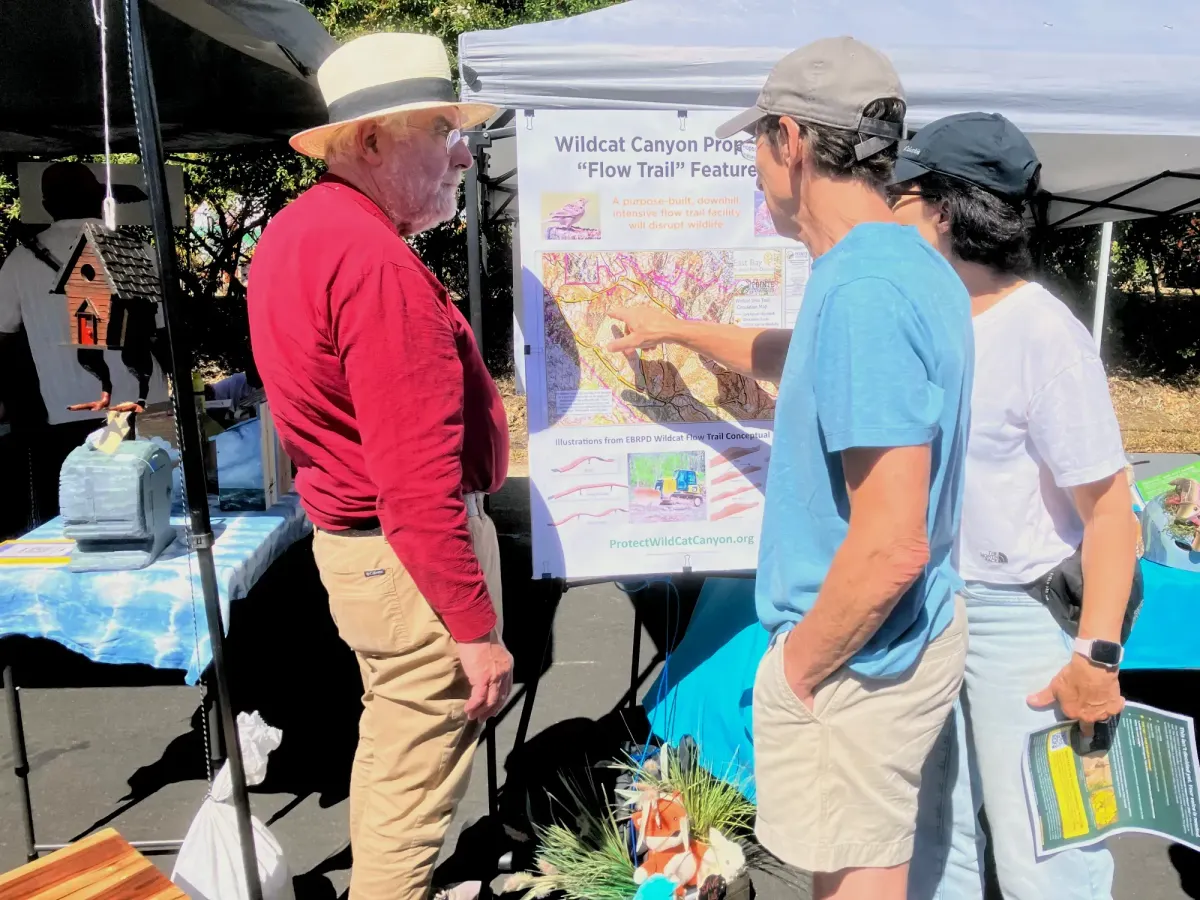
A proposed mountain bike trail in Wildcat Canyon Regional Park has divided neighbors, park advocates and environmental watchdogs for more than three years. A draft environmental impact report is expected this fall, setting up a decision on whether the East Bay Regional Park District's most contested trail project in years will move forward.
The proposal calls for a 1.4-mile downhill-only trail that would run alongside the existing Mezue fire road. Berms, rollers and turns would be used to control riders' speed. The trail is designed for beginner and intermediate riders, with an average grade not exceeding 5 to 8 percent.
Opponents say the trail doesn't belong in a natural area. Supporters, including the youth mountain bike teams the trail is intended to serve, say it would help address overcrowding on trails they already use.
The dispute has taken on a life of its own on Nextdoor, joining a short list of local fights, including the El Cerrito library tax and the Hopkins Street bike lane, that routinely draw hundreds of comments and turn neighbors against one another.
The project dates back to 2020, when the Northern California chapter of the National Interscholastic Cycling Association approached the district about the growth of middle and high school teams in Berkeley, El Cerrito, Albany and Richmond.
Park district considers mountain bike flow trail at Wildcat Canyon Park
Members of local high school mountain bike teams came out in force to support a proposed mountain bike trail at Wildcat Canyon Park during a public workshop held by the East Bay Regional Park District last month. The East Bay Regional Park District has received a lot of interest in
 Soren Hemmila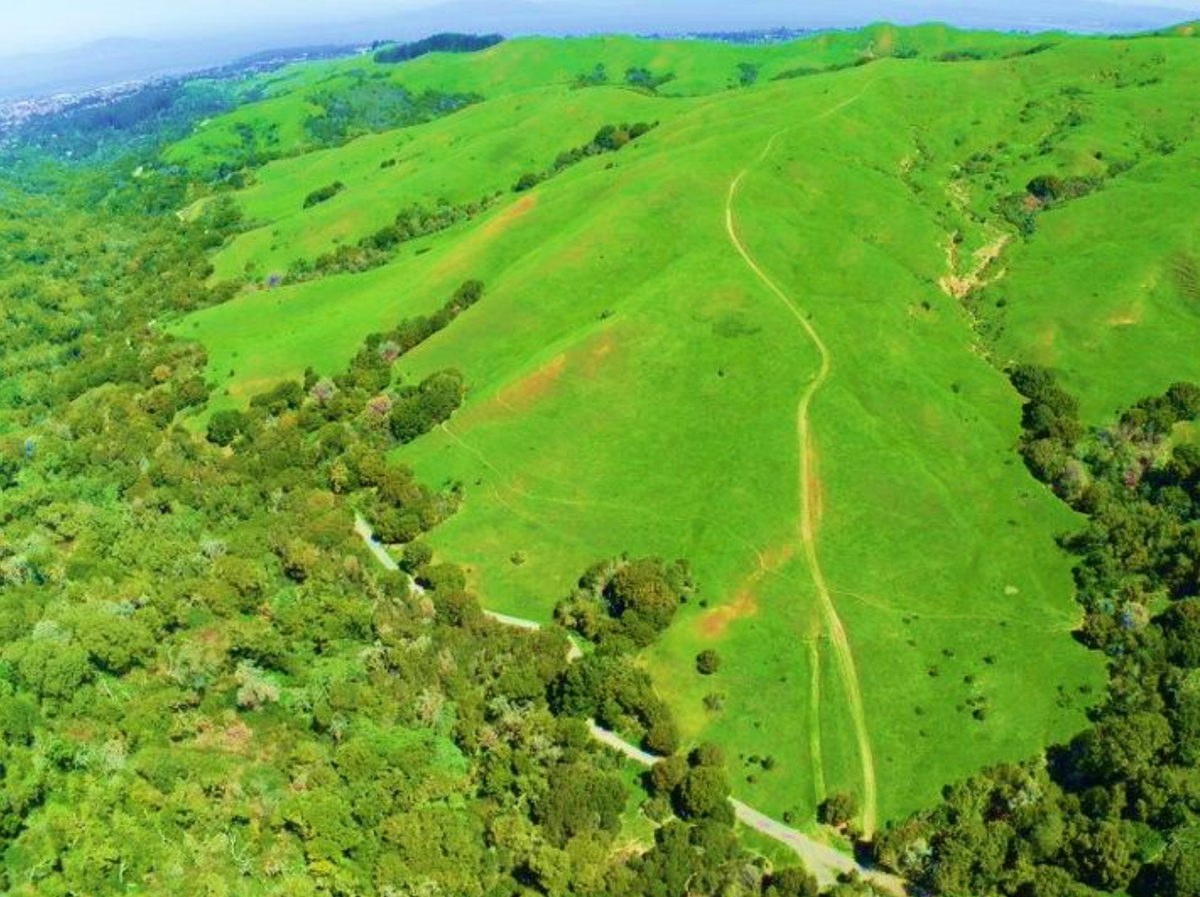
The district says those teams log about 40,000 riding hours each season on 30 miles of trails shared with hikers and equestrians.
Scott Bartlebaugh, an advocate with the Bicycle Trails Council of the East Bay, said staff discussions began in December 2020. The issue eventually reached Ward 1 Director Elizabeth Echols, whose district includes Wildcat Canyon. Joel Shrock, advocacy lead for Bay Area Mountain Biking, said the project grew out of the same overcrowding problem seen at nearby Tilden Regional Park.
Opponents remember that period differently.
Steve Lautze of Friends of Wildcat Canyon Park said a multi-user committee was working to address trail conflicts around the same time park staff were meeting separately with bike advocates and prospective donors. He said he learned about those meetings through a public records request.
"We found out that the planning was happening for this trail," Lautze said. "We're not against mountain bikes or mountain bike trails, but we want to have a clean, clear, transparent process."
Bartlebaugh and Shrock reject the idea that the project was developed secretly. They point to two scoping meetings, several community presentations and thousands of public comments since then.
Park district moves forward with Wildcat Canyon bike trail environmental review
The East Bay Regional Park District Board of Directors on Tuesday, August 5, 2025, approved the release of a Notice of Preparation for an Environmental Impact Report (EIR) on a proposed new bike trail in Wildcat Canyon Regional Park. The vote advances a project that has sparked intense public interest
 Soren Hemmila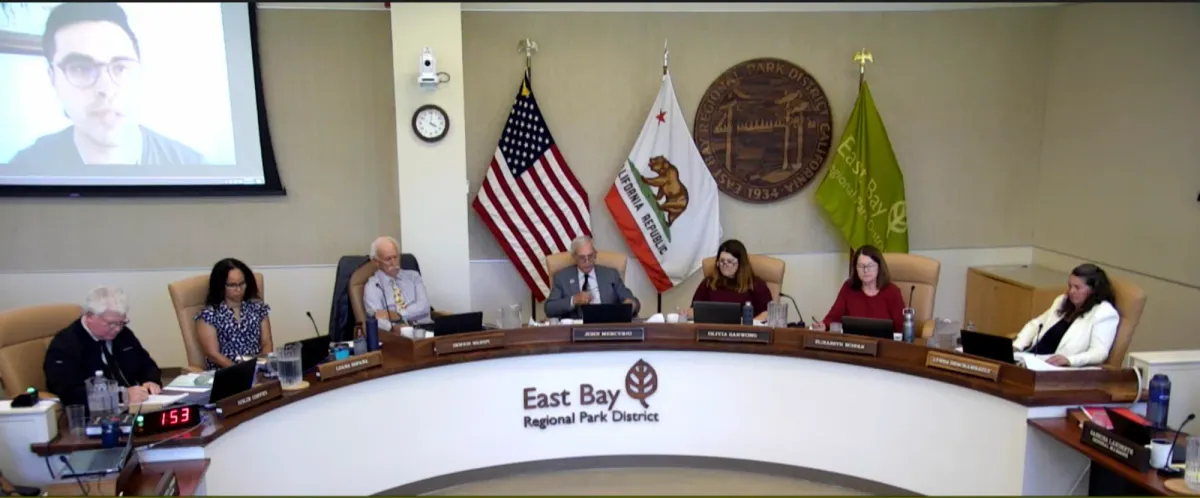
Shrock said he asked opponents to propose an alternative site. He said none did.
The biggest disagreement may be over whether Wildcat Canyon's natural area designation allows a trail of this kind.
Norman La Force represents the Sustainability, Parks, Recycling, and Wildlife Legal Defense Fund, colloquially known as SPRAWLDEF. He said the park's 1985 land use plan designates nearly all of Wildcat Canyon as a natural area, with the Alvarado Staging Area as the only exception.
Before the trail can be built, he said, the district would need to amend that plan because the proposed project amounts to what he calls an intensive recreational facility.
Marcy Greenhut, also with Friends of Wildcat Canyon Park, said the environmental review is looking at too small an area. The study area covers the trail corridor, she said, even though the project's effects could extend to connecting trails.
"We know because they're going to be biking all over here, that's going to impact this whole area," Greenhut said. "If it's just this area here, that's a totally disingenuous study."
The district FAQ disputes the zoning argument and says the 1997 and 2013 master plans allow narrow trails for hiking, riding and bicycling within natural units. Most of Crockett Hills has the same designation, as do 97 percent of Pleasanton Ridge and most of Briones Regional Park. All three already have bike trails.
The district also says the proposed trail is consistent with the 1985 Wildcat Canyon Land Use Plan, which lists bicycling as an appropriate use.
Shrock made a similar argument. He said the land use plan calls for parks to be 70 to 90 percent natural area and that building a trail through open grassland does not change that classification.
Bartlebaugh described natural area as a broad classification intended to indicate less development, distinguishing it from the Alvarado Park designation for parking and picnic areas.
Habitat, landslides and the creek
Greenhut said the project threatens habitat for the Alameda whipsnake, grasshopper sparrow and a mountain lion corridor that runs through the park.
Even a relatively small trail footprint can break up a wildlife corridor, she said.
The district's biological study, conducted by Nomad Ecology, confirms the potential presence of several sensitive species, including the whipsnake, California red-legged frog and nesting birds during construction. The district says preconstruction surveys and monitoring can reduce those impacts.
La Force has also raised concerns about landslides and impacts to Wildcat Creek. He said the district's early materials understated both risks.
Bartlebaugh disagreed. He said the proposed trail would be narrower and have a gentler grade than the existing Mezue fire road, and that there is no recent history of active landslides in the area.
He said the trail would be several hundred feet from the creek, on the other side of the fire road, and that erosion should be less than what the fire road already produces through routine grading.
Havey Canyon and the traffic question
Lautze and Greenhut said a circulation map prepared by a district consultant shows Havey Canyon Trail as the gentlest route back to the top of the proposed trail.
They expect riders to funnel onto it despite its seasonal closure and sensitive habitat.
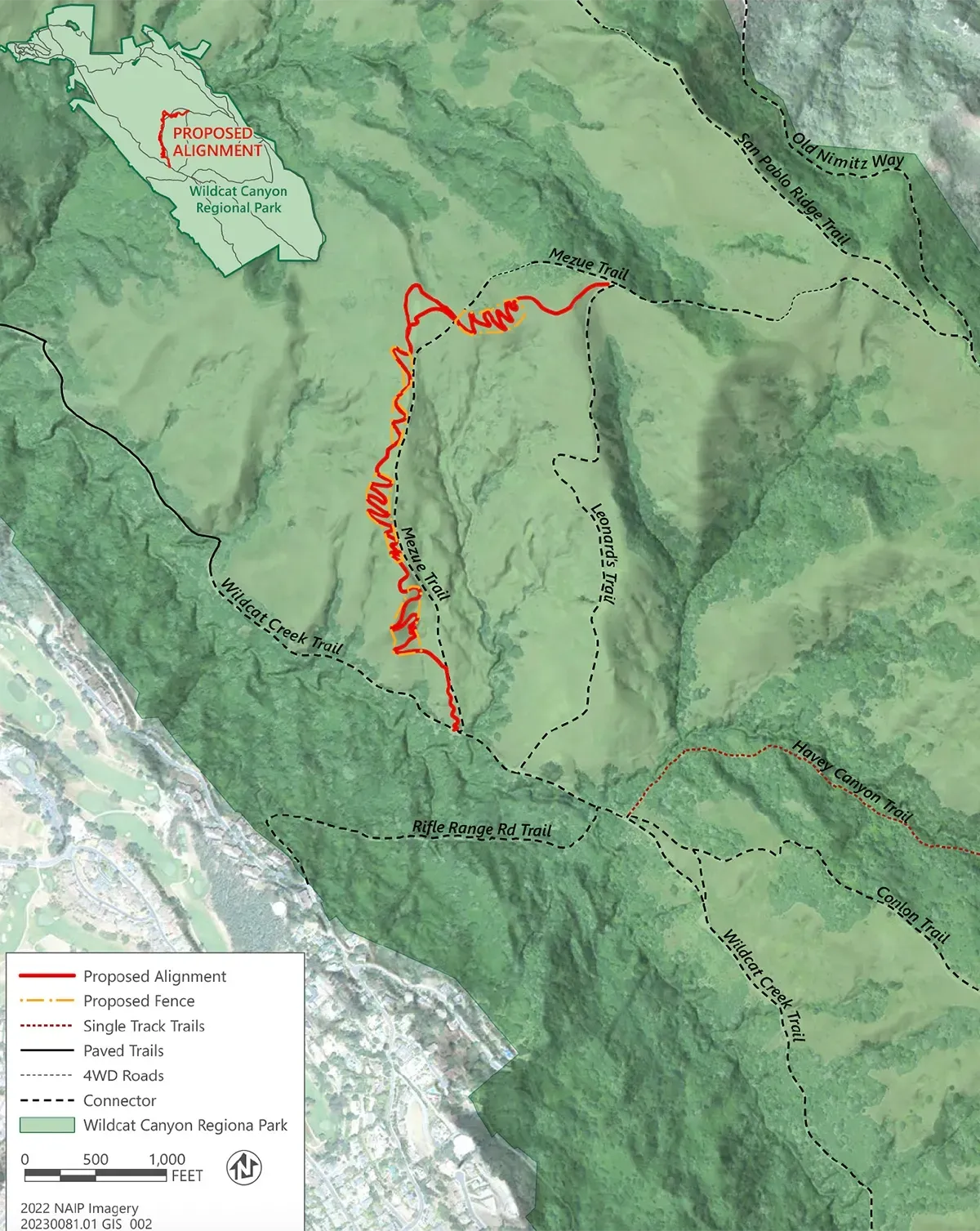
Shrock said Havey Canyon closes to bikes during the winter for a different reason: Its clay soil gums up tires when wet, he said, rather than because of the trail's scenery or grade.
He pointed to a trail called Enticer in Redding as a precedent. Before that trail was built, he said, bike traffic was spread throughout the trail system. Afterward, riders concentrated on the new trail, easing pressure elsewhere.
Bartlebaugh made a similar argument, pointing to the Briones pilot project and Crockett Hills Regional Park as examples of legal, purpose-built trails that reduce the use of unauthorized routes rather than increasing them.
The million-dollar question
La Force said two donors have pledged $1 million toward construction, contingent on the district approving the trail.
He said the district has already spent about $500,000 on the project. He expects the environmental review to identify problems and said that could leave the board with an uncomfortable choice: certify a report that acknowledges known impacts and keep the money, or decline to certify it and lose the $1 million.
"My response is just follow the money," La Force said. He said he doubts any director would vote to let a million dollars slip away.
The district's FAQ says the district does not create projects in response to private donations.
The Regional Parks Foundation, the district's philanthropic partner, was approached with a donation offer in 2021, according to the FAQ. But the foundation has not finalized an agreement or accepted any funds while the board's review continues.
Cort Cooper and Barb Smith of Kensington confirmed they are the donors. They said they proposed the flow trail, along with others, in 2021 and would donate toward construction if the trail is approved.
"We will be glad to make a donation to support construction if the trail is approved," they said.
Cooper co-founded the Wildcat mountain bike club for middle schoolers in 2013 and has led it ever since. More than 500 youth riders from Richmond, El Cerrito, Albany and Berkeley have gone through the program, they said. Smith rides as a coach.
The two said they support "rigorous environmental evaluation and healthy discussion of the proposal's merits."
The Briones precedent
A separate legal fight over bike trails in another East Bay park is also shaping the debate over Wildcat Canyon.
SPRAWLDEF sued the district over bike trails in Briones Regional Park, arguing that they needed an additional environmental review.
On July 31, an Alameda County Superior Court judge denied the group's petition, ruling that the trails were exempt because they formalized pre-existing routes.
The judge also said the group's underlying concerns about heavy bicycle use "appear supported."
Bartlebaugh and Shrock both cited the ruling as a victory for the district's approach.
But there is a key difference: The Briones case involved existing trails, while the Wildcat Canyon proposal calls for new construction.
A compliance hearing to finalize the judgment is scheduled for August 27.
Fencing
Both sides agree that the district plans to use wildlife fencing to keep cattle off the trail. The fencing would be divided into three or four individual sections rather than a single continuous barrier.
Bartlebaugh and Shrock both said the gaps are intended to allow cattle and wildlife to move through. Areas without fencing would instead receive reinforced surfacing where seasonal water crosses the trail.
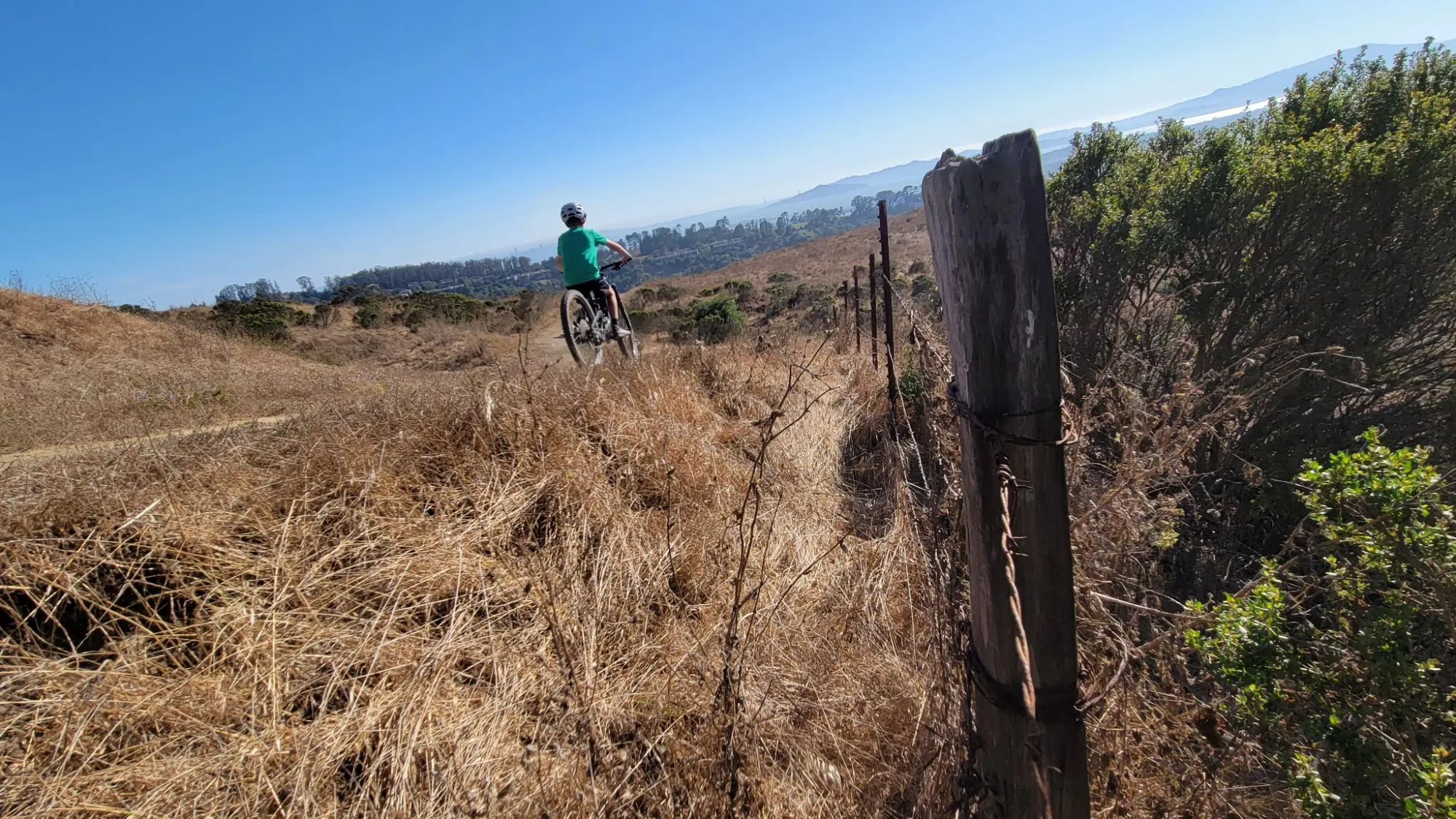
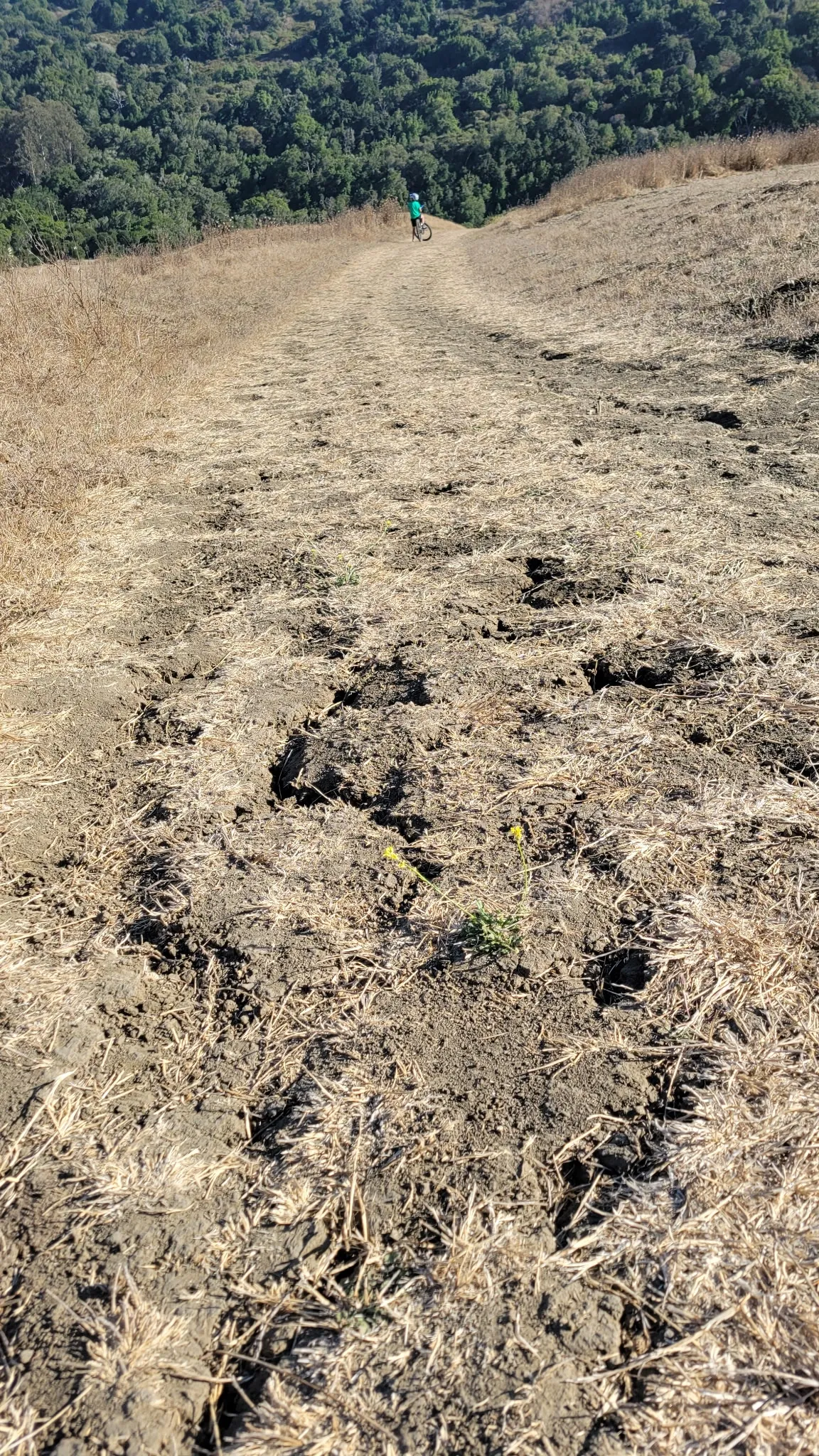
Joel Shrock describes barbed wire fencing already running "all over the place" near the top of Mezue Trail, and says the steep slope is causing erosion visible in the rutted trail surface. Photos/ Joel Shrock
That account has been publicly disputed.
One resident, citing designs presented by the district, has described the fencing as barbed wire and raised concerns about wildlife injuries.
Shrock said barbed wire fencing already exists on Mezue. He said the area has fencing "all over the place" because of existing cattle grazing, rather than the new trail project.
One point in the debate goes against the opposition's safety argument.
Shrock, who recently visited the site with his son, said the existing Mezue Trail is steep enough that a rider could coast at 35 to 40 mph without any engineered speed controls.
The proposed flow trail, by comparison, is specifically designed to slow riders with rollers and a gate where the new trail would meet Mezue.
If speed on the hillside is the real safety concern, Shrock argued, the existing fire road presents the bigger problem, not the trail designed to serve downhill riders.
The draft environmental impact report is expected this fall. Its release will begin a public comment period and hearing.
A final report addressing those comments will follow, along with another comment period. The park district board will then vote on whether to certify the report and approve or deny the project.
If the report identifies significant, unavoidable environmental impacts, the board will have to decide whether to proceed or look for another location.
YOU GET MORE WITH A PAID SUBSCRIPTION
Your subscription enables Grandview Independent to deliver more:
- More time devoted to in-depth reporting
- Longer, more comprehensive stories
- Greater coverage of what matters to our community
Quality journalism costs money. Subscriptions allow us to keep reporting the stories that matter, without paywalls getting in the way of critical community information.
CLICK HERE TO SUBSCRIBE - Starting at just $10/month
FOLLOW US FOR BREAKING NEWS:
• Twitter: @GrandviewIndy
• Instagram: @GrandviewIndependent
• Facebook: @Grandview Independent
Copyright © 2026 Grandview Independent, all rights reserved.
Members Discussion