
Education
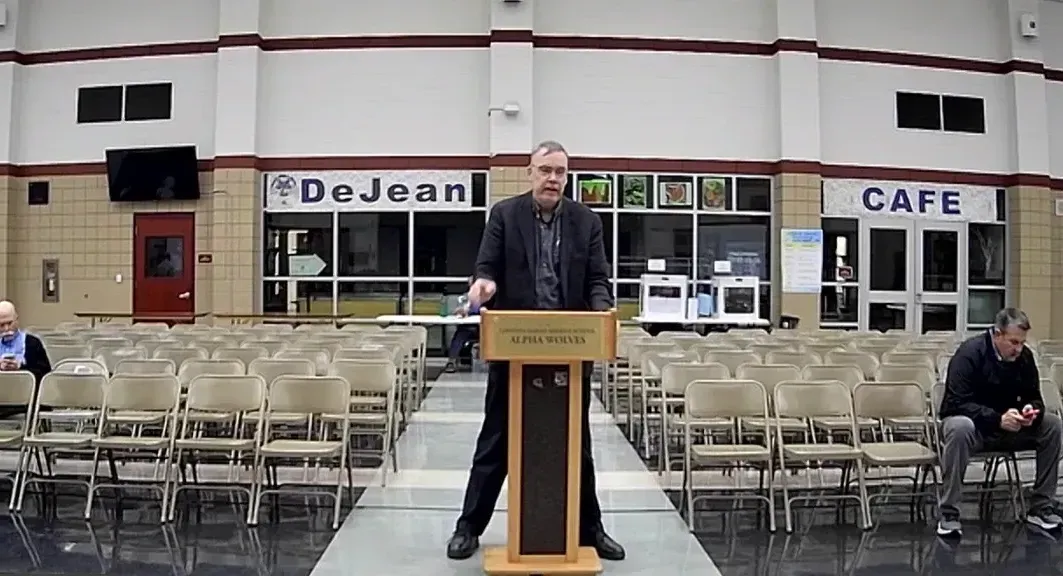
The West Contra Costa Unified School District will lose more than 2,000 students over the next six years, a demographic consultant told the school board Wednesday night, with Richmond high schools bearing the steepest declines while a shortage of new housing offers little prospect of recovery.
The projections, presented by Ken Reynolds of SchoolWorks GIS, showed district enrollment falling from 24,592 students today to 22,329 by 2031, a 9.2 percent drop driven by declining birth rates, rising housing costs, and families leaving the district for charter, private, and home schools.
"The number of children being born each year in our state has been declining statewide," Reynolds told the board. "We used to have over 600,000 births. This past year, we only had 400,000. We've lost a third of the births in our state over the last 12 years."
The numbers are most troubling for high schools serving Richmond and the surrounding area. Richmond High School is projected to fall from 70 percent of capacity today to 57 percent by 2031. Kennedy High School, already the district's smallest high school at 53 percent capacity, is projected to drop to just 41 percent. De Anza High School is projected to drop from 66 percent to 60 percent over the same period.
The contrast with El Cerrito High School is sharp. El Cerrito is currently at 94 percent capacity and is projected to exceed 104 percent by 2031.
West Contra Costa Unified · Enrollment Projections
Projected enrollment by school, 2025/26 to 2031/32
Projected facility utilization by school. Select a school level to explore.
Source: WCCUSD 2025/26 Demographics and Enrollment Projections, SchoolWorks GIS, February 2026. Utilization = enrollment ÷ net classroom capacity.
Housing
The demographic study projects 573 new housing units in the El Cerrito High School boundary over the next six years – more than any other high school in the district. The projection for the Richmond High School boundary is zero.
District-wide, 1,762 new homes are projected over six years, spread across other school boundaries. But Reynolds cautioned that even those homes will generate far fewer students than new construction once did.
West Contra Costa Unified · Housing
No new housing planned in Richmond High School boundary through 2032
The district tracks planned residential development by high school boundary. Every boundary except Richmond's has new units in the pipeline.
New units projected, district-wide
1,762
New units in Richmond HS boundary
0
Students those units will generate
356
Projected new housing units by high school boundary, 2026–2032
School boundary
New units 2026–2032
Total
El Cerrito HS
573
Kennedy HS
415
Hercules HS
378
De Anza HS
238
Pinole Valley HS
158
Richmond HS
0
Source: WCCUSD 2025/26 Demographics and Enrollment Projections, SchoolWorks GIS, February 2026.
"Historically, for grades K through 12 in our state, that number has been 0.7 students per home," Reynolds said. "We're only projecting 0.2 students per home." He attributed the drop to rising housing costs and declining birth rates, adding that new housing is "the most difficult" variable to project accurately because market conditions can shift rapidly.
The district projects that 1,762 new homes will generate just 356 additional students over six years, not enough to offset the losses driven by declining births and families leaving the district.
Reynolds also noted that more than 1,000 homes are projected for the Kennedy High School boundary beyond the current six-year window, held up by the slow housing market. He said a planned rebuilding of the Kennedy campus, not included in the current projections, could also attract new students. He agreed to work with district staff to model the potential impact of both factors.
"Whenever we have a brand new elementary school open, enrollment typically is more than that, because there are students from outside that area trying to enroll in the brand new school," Reynolds said. "So that can occur."
West Contra Costa Unified · Planned Housing Developments
3,735 units planned — only 1,762 expected in six years
Many planned developments are far from completion. Studios and 1-bedroom apartments are excluded from enrollment projections.
Total units planned
3,735
Expected within 6 years
1,762
Students generated
356
Development
Total units
6-yr projection
Source: WCCUSD 2025/26 Demographics and Enrollment Projections, SchoolWorks GIS, February 2026.
Charter schools
Several board members pointed to charter schools as a significant driver of enrollment loss. Trustee Reckler said thousands of students within the district's boundaries are choosing charter schools over traditional public schools.
Reynolds said the demographic study captures the impact of charter schools by tracking changes in district enrollment over time. He said that district enrollment accounts for about 75 percent of school-age children in the community, below the state average of 80 percent, and has remained relatively stable at that level. He said the gap represents potential room for growth.
Trustee Demetrio Gonzalez-Hoy argued the board should focus on understanding why families are leaving rather than discussing school closures. He said the data showed the sharpest losses occurring between fifth and seventh grade, the same grades where charter school enrollment is concentrated.
"There are thousands of students that are choosing to go to other schools, private, homeschool, and charter schools," he said. "We need to actually focus on the why behind that."
Board divided
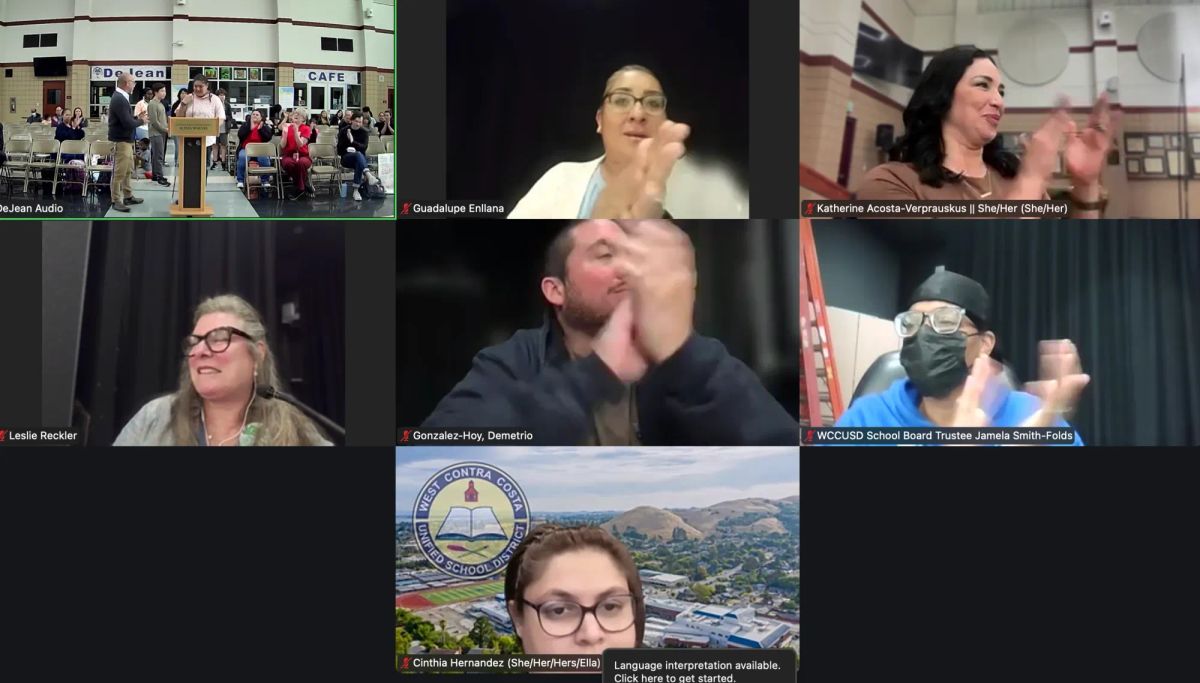
The board did not take any action on the report on Wednesday, but the discussion revealed a divide between trustees who want to focus on reversing enrollment trends and those who say the board must begin preparing for possible school closures.
Trustee Jamela Smith-Folds said the board could no longer avoid the conversation.
"We cannot operate schools that are small because operating a school costs money," Smith-Folds said. "As a collective board, we have never wanted to have the conversation about school closures because it's never been part of what we wanted. But I think if we are being honest, looking down the road, it is a conversation that we're going to have to start broaching."
Smith-Folds warned that if the board did not act proactively, outside authorities might force the issue. "If people come in here, the state, the county, whoever, they're going to do it without the tenderness and care that we would have, because we are the community."
Trustee Leslie Reckler called the report "sobering" and praised the district for presenting it publicly, noting that previous demographic studies had been "buried on the 20th page of the business services."
Reckler called for a formal, measurable action plan addressing attendance, school boundaries, existing program offerings, and what she called "calculated risks" to attract students back. She also suggested the district explore workforce housing and joint ventures as alternative revenue sources. She said planning should begin over the summer ahead of a facilities master plan expected in the fall.
"We can be led, or we could lead change," Reckler said. "And I think we should try to lead the change."
Board President Guadalupe Enllana said the data should prompt the district to consider how to support schools equitably and to bring attendance back up in areas experiencing the steepest declines.
Methodology
Reynolds said the cohort-based methodology used in the study, which tracks groups of students as they move through grade levels year over year, has an error rate of about one percent or less. He said the state uses a similar methodology to fund new school construction.
The study also incorporates local birth data and new housing development projections gathered from cities and developers across the district. Reynolds said the projections are most uncertain in housing, where high interest rates and construction costs have made timelines difficult to predict.
"There's a lot of people projecting that it will continue to be a challenge over the next several years," he said. "And some people believe that things could turn around and improve, so that makes this area the most difficult in creating an accurate projection."
A facilities master plan, which will draw on demographic data, is expected to be returned to the board in the fall.
YOU GET MORE WITH A PAID SUBSCRIPTION
Your subscription enables Grandview Independent to deliver more:
- More time devoted to in-depth reporting
- Longer, more comprehensive stories
- Greater coverage of what matters to our community
Quality journalism costs money. Subscriptions allow us to keep reporting the stories that matter, without paywalls getting in the way of critical community information.
CLICK HERE TO SUBSCRIBE - Starting at just $10/month
FOLLOW US FOR BREAKING NEWS:
• Twitter: @GrandviewIndy
• Instagram: @GrandviewIndependent
• Facebook: @Grandview Independent
Copyright © 2026 Grandview Independent, all rights reserved.
Members Discussion