
Education
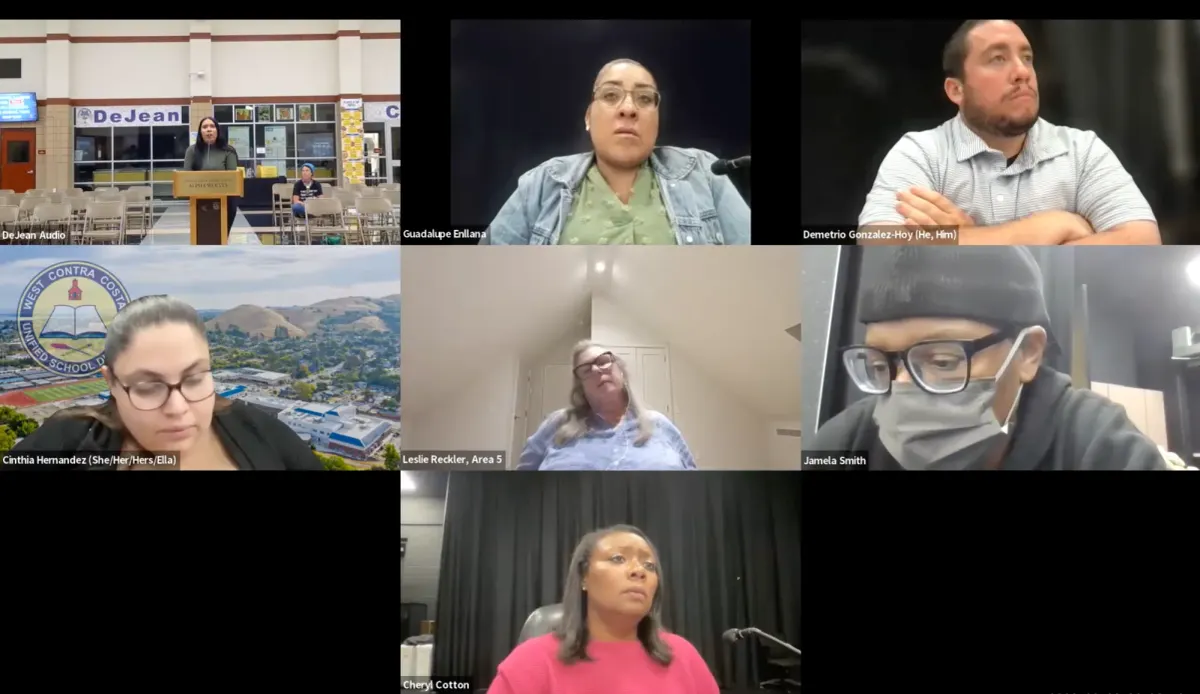
West Contra Costa Unified School District is changing how schools respond to racial slurs and other racial harm, requiring staff to document incidents, notify families and provide support to students who are targeted.
The new protocol, presented to the school board August 26, is part of an update to the district's Anti-Slur Initiative and is intended to give schools a consistent response when racial harm occurs on campus.
LaShante Smith, the district's director of positive school climate, said the changes followed a year of work with school leaders, community members and students, including a survey of district principals and a youth action forum on how students experience the district's response to hate speech.
Smith said the survey identified several needs, including guidance on how to confront anti-Black racism and racial slurs in the moment and strategies for preventing repeat incidents.
Principals also asked for help determining which incidents should be handled in the classroom and which require an administrator.
Students at the youth forum had their own thoughts.
"They wanted clearer expectations across our system around the use of harmful language and slurs. They also wanted robust student reporting systems and meaningful consequences," Smith said.
Students also questioned whether suspension alone changes behavior.
"A lot of young people said that you can suspend a student and they come back and the behavior does not change," Smith said. "We know from research when we exclude students and push them out of school, that does not necessarily change the behavior."
The first 60 minutes
The centerpiece of the update is a protocol Smith called "the first 60 minutes," outlining the steps schools must take after an incident is reported.
Schools are expected to separate the students involved, assess the impact, document what happened and what was said, and conduct a due process review. Both families should be notified immediately, Smith said, and the incident should be logged in PowerSchool the same day.
The district has also begun monitoring the data across schools, something Smith said is new this year.
The protocol works alongside the district's existing three-tier discipline matrix. Level one incidents are handled in the classroom, level two brings in an administrator and level three covers major infractions or incidents requiring a safety response.
Smith said the goal is "the lowest appropriate response that can repair the harm." Restorative practices are voluntary for students and families.
Students affected by racial harm are to receive support regardless of the level assigned to an incident, including safety plans and a designated point of contact for the family.
The district also plans to launch an anonymous QR code reporting system, an idea that came directly from students. Smith said the district is still determining how it will be staffed and how reports will be handled.
Trustee Demetrio Gonzalez-Hoy asked how the district will ensure responses are consistent from school to school.
Smith said the district will compare three types of information: incident data recorded in PowerSchool, feedback from parents and community members, and student perceptions of how schools respond.
"With all three data sources, we'll be able to identify where we're not doing well, and where we need to go provide additional support," she said.
Trustee Jamela Smith-Folds asked how the district handles racial harm by an adult toward a student.
"If it's an adult, the first recourse is that talking to the site administrator, and the site administrator should then be in contact with human resources around next steps and guidance for adult-to-student behavior," Smith said.
Smith-Folds also asked how the district distinguishes a single remark from a pattern of behavior, citing the example of a student repeatedly touching a classmate's hair after being told to stop.
"If a student is doing something that is racist, whether it's micro or macro, in your face, we're still going to respond," Smith said. "So if a student is touching someone's hair when they've been told not to touch the hair, and they're still touching the hair, that can be considered harassment. We're still going to respond, and we're still going to have the same response protocols in regard to investigating what happened."
The district plans to discuss the policy at back-to-school nights and provide new materials for families. Smith also said the district will meet with its All Student Congress on Sept. 14 and is developing campus signage based on suggestions from students.
YOU GET MORE WITH A PAID SUBSCRIPTION
Your subscription enables Grandview Independent to deliver more:
- More time devoted to in-depth reporting
- Longer, more comprehensive stories
- Greater coverage of what matters to our community
Quality journalism costs money. Subscriptions allow us to keep reporting the stories that matter, without paywalls getting in the way of critical community information.
CLICK HERE TO SUBSCRIBE - Starting at just $10/month
FOLLOW US FOR BREAKING NEWS:
• Twitter: @GrandviewIndy
• Instagram: @GrandviewIndependent
• Facebook: @Grandview Independent
Members Discussion