
Election'26
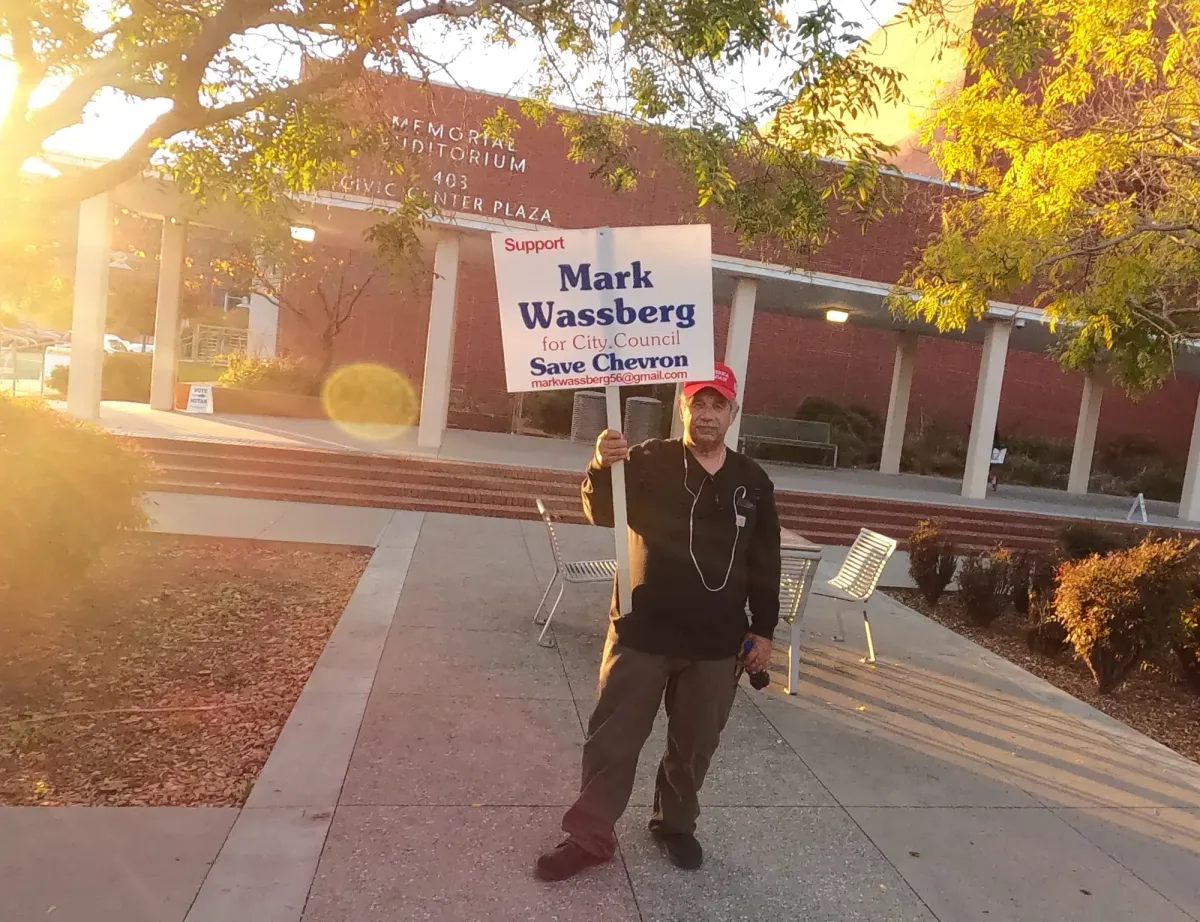
Mark Wassberg has been thrown out of Richmond City Council meetings more times than he can count. He figures it will happen again at the next one. He is running for mayor anyway.
Who he is
Wassberg was raised in San Pablo, went to Helms Junior High, and graduated from Richmond High in 1975. He spent most of his working years in Richmond, then moved to Point Richmond to work on tugboats. He worked as a mechanic most of his life. He did a stint at Chevron and worked at factories across Richmond until, as he put it, Jimmy Carter’s economy shut them all down around 1980. He was forced into a job-training program and worked as an auto technician for several years.
Election′26 - Grandview Independent
Follow all coverage of Richmond’s 2026 election cycle, including mayoral and city council races, candidate announcements, campaign developments, and updates shaping the city’s political landscape.
 Soren Hemmila
Wassberg says many people think he is a MAGA supporter because he backs Trump, but he says he cares about doing what is right. To him, it is not about political parties but about following the law and the Constitution.
Wassberg describes himself as a former "die-hard Democrat" who eventually broke with the party.
“I used to be a Democrat, a die-hard Democrat, but the Democrat Party, that did it with me,” he said. “It’s not being a Democrat, it’s not being a Republican. It’s all about doing what is right under the Constitution.”
Wassberg says he doesn’t care what people call him.
“They can call me a Trump supporter, they can call me a conservative,” he said. “It’s about doing what’s right. I believe in supporting the community, having jobs, education, and trying to make the city safe. I’m against illegal immigrants. I’m against defunding the police.”
Those convictions grew out of years spent watching what Richmond could become. Starting in 2004, Wassberg spent roughly six years filming violence in the city — riding along with police, spending time with gang members and activists, recording homicides, shootings, and beatings. He turned the footage into a documentary, which he is still editing and hopes to screen around Richmond.
“I was with the police, with the gangsters, I was with the activists,” he said. “Filming homicides and shootings and beatings, and made a documentary about it. It says everything you want to know about Richmond.”
He describes a period of personal upheaval before his current life. He rode with a biker group for two decades, frequented bars, and by his account was regularly in trouble. In 1979, he was in a serious accident that killed his best friend. He says that experience changed him completely.
“I quit all the drugs, I quit all the alcohol, quit all women, started the church,” he said. “Back in the day, I was a partier, you know, going to the bars, drugs, rock and roll, Harley Davidson, for 20 years I was all in that scene. Then I got out of it.”
What drew him into local politics, he said, was a city council decision that opened the door for undocumented immigrants to drive without a driver’s license.
He began attending meetings and then running for Richmond City Council multiple times, without success. By his count, he has been removed from council chambers approximately a dozen times. Now he is aiming higher.
On public safety
Wassberg’s campaign centers almost entirely on public safety, and for him, that means law enforcement staffing above everything else. He argues that Richmond’s investment in alternative response programs, specifically ROCK and ONS, has drawn money away from the police and produced little in return.
“They gave them $6 million, and they’re just out riding around and talking to the homeless people,” he said. “ROCK is just a waste of time. My main focus: public safety, law enforcement, and infrastructure. These are the two most important things that are happening with our city and must be done. You cannot let infrastructure fall apart. You cannot let law enforcement fall apart, or else you’re going to have some serious problems.”
He says he would move to eliminate both ROCK and ONS if elected, and would fire the current police chief on his first day in office over what he describes as "the department’s refusal to cooperate with federal immigration enforcement."
Wassberg points to his own experience as evidence of what he sees as systemic failures. He says he once called 911 and waited five hours for a response.
“I called them about five times, and they showed up five hours later,” he said. “Then I got into an argument with them. You cannot have this with our government, because the number one thing for the government is public safety, to have law enforcement up to par and make sure they’re obeying the constitutional laws.”
On homelessness
Wassberg lived in his truck for thirteen years. He describes that period as one in which he stayed away from drugs and alcohol and eventually pulled himself out. He does not apply the same frame to most of the homeless people he sees in Richmond today.
“I lived in my truck, I lived on the street, and I stayed away from the alcohol and the drugs,” he said. “See, there’s programs out there for people that really want to help themselves. But most of the people I see here in Richmond, they don’t want to do it. If you offer them a job, they wouldn’t even take it.”
He believes the city’s supportive housing programs reward behavior that should instead be changed.
“The more you cater to these people, the worse it’s going to get,” he said. He pointed to two nearby projects, the Richmond Tiny House Village, Farm & Garden, and the Greater Richmond Interfaith Program across the street. “They’re going to be living there for free. I can see if they want to live there, they’re going to have to be in a job training program.”
His proposed alternative is something closer to a mandatory program: housing tied to participation in job training, with a structure resembling, in his words, the military or prison. People who comply get food, clothing, and job placement help.
“You get up in the morning, you come pick them up, you take them to Contra Costa College or to a job training program. We will feed you, we will clothe you,” he said. “It’s just sort of like being in prison or being in the military, that you have to have a certain average to stay in this program, and then hopefully, when you finish, we will help you find a job. See, that’s how you start addressing homelessness.”
On economic development
Wassberg worked at Chevron and describes the wages there as the kind of economic foundation small green jobs cannot replicate. He is skeptical of the city’s direction toward clean energy employment.
“When I worked at Chevron, I was making $1,400 a week, all the overtime I wanted,” he said. “Right now, people working at Chevron make $90,000 a year, and they can retire a millionaire with stocks. What small green job can you do that with? You can’t. It just doesn’t make sense to just focus on small green jobs. It’s a disaster.”
He argues Richmond needs to attract businesses by reducing what he sees as an excessive regulatory and tax burden. He pointed to the city’s treatment of auto dealerships as an example of overreach.
If elected, he says the Chevron settlement money would go first to law enforcement, then to roads, which he says have gone unrepaired for fifteen years despite a road tax he calls a “con game,” and then to youth job training.
“I will start a massive job training program for the youth,” he said. “Have special programs so they could have something to do, so they won’t be getting into trouble, and try to better the community. It’s all about making Richmond what it should be.”
On working with the council
Wassberg does not describe a vision for working with the current city council so much as a plan for confronting it.
“If I become mayor, I will give them a good workover that they will never forget,” he said. “I would tell them, if you’re not going to respect our constitutional laws, if you’re going to pass laws to support people being criminals, then you’re in the wrong place. If I become mayor, I mean business. I’m not going to let them, I’ll be on them 24/7.”
He said he expects a competitive mayoral race, with multiple candidates competing for progressive voters. He acknowledges he has raised no money yet.
Outside his window, his truck sits waiting. He spent $1,600 filing to get on the ballot, money he said could be used to fix it.
“I was just sitting there looking at a piece of junk truck,” he said. “I said, I could have had the windows fixed, I could have had the fenders fixed, I could have had a new bumper, everything.”
He figures he has about six more months before he can afford to fix it. In the meantime, he will keep showing up to council meetings. The council, in his view, has spent years passing laws that protect criminals, defunding the police, and handing millions of dollars to nonprofit organizations while the roads crumble and 911 calls go unanswered for hours. Somebody has to say so out loud. He has appointed himself that person.
“People see me on the street and say, ‘Hey Mark, are you going to get kicked out again?’” he said. “I said, probably.”
Council candidate says rights violated after meeting ejection
District 1 Richmond City Council candidate and frequent meeting commentator Mark Wassberg says his rights were violated when he was removed from a special meeting last week. During the public comment period, Wassberg criticized the city council, referring to them as a bunch of idiots. When Wassberg mentioned he was
 Soren Hemmila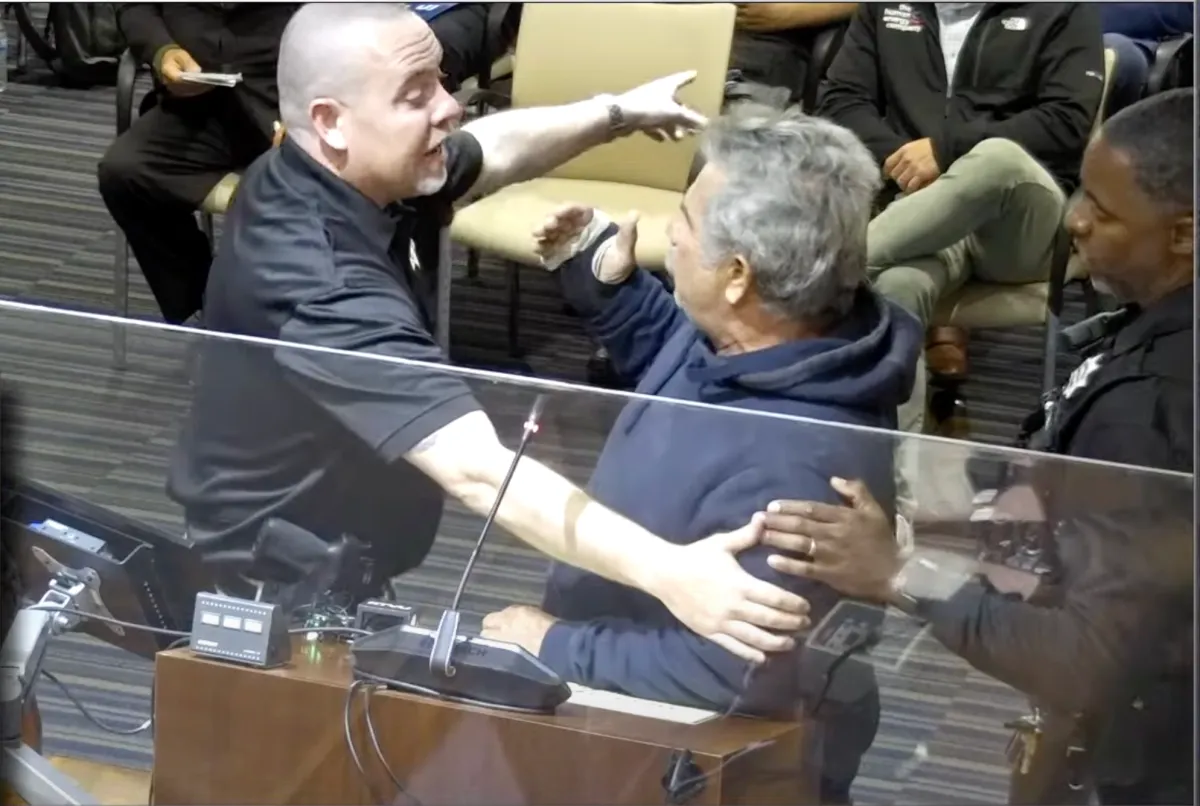
Outside of Politics
Wassberg said he has a life outside of politics and being visible at city council meetings.
“People won’t believe me that I go to church on Sunday,” he said. “I haven’t even told them that. People are going to think I’m crazy.”
Before you vote, meet the candidates. Grandview Independent reached out to everyone running for city council and mayor. Find all the conversations at our special election page.
YOU GET MORE WITH A PAID SUBSCRIPTION
Your subscription enables Grandview Independent to deliver more:
- More time devoted to in-depth reporting
- Longer, more comprehensive stories
- Greater coverage of what matters to our community
Quality journalism costs money. Subscriptions allow us to keep reporting the stories that matter, without paywalls getting in the way of critical community information.
CLICK HERE TO SUBSCRIBE - Starting at just $10/month
FOLLOW US FOR BREAKING NEWS:
• Twitter: @GrandviewIndy
• Instagram: @GrandviewIndependent
• Facebook: @Grandview Independent
Copyright © 2026 Grandview Independent, all rights reserved.
Members Discussion