
City Council Updates
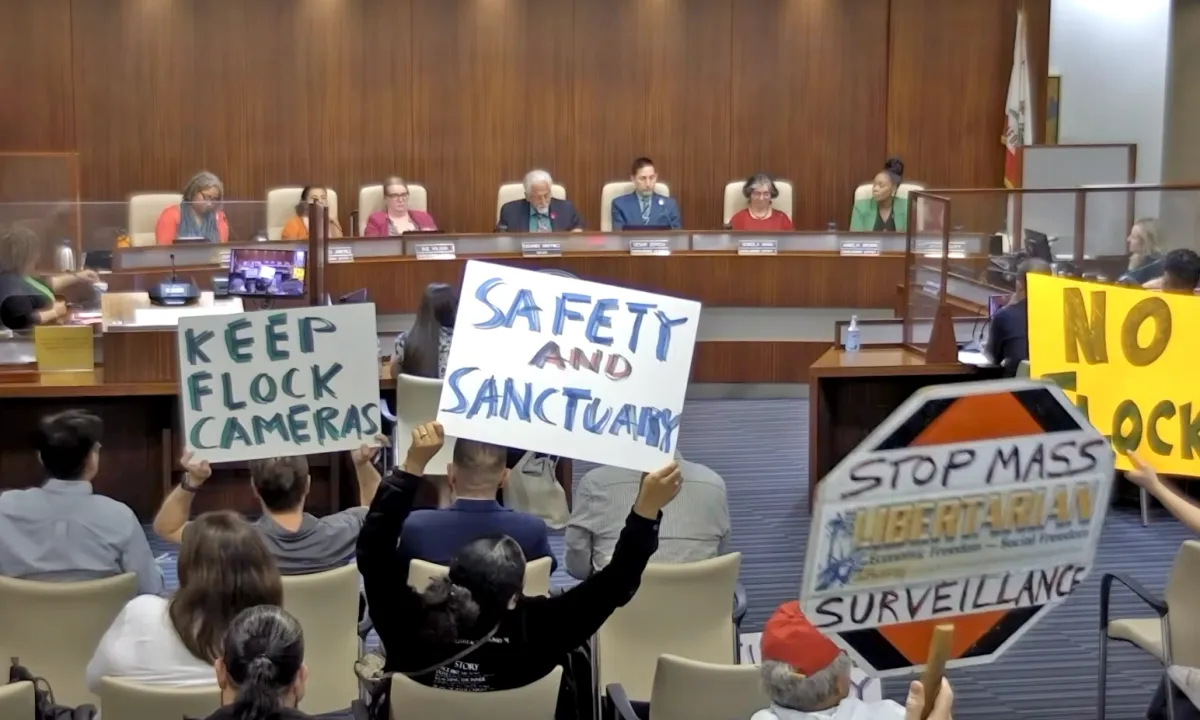
The Richmond City Council voted Tuesday night to extend the city’s contract with Flock Safety through December 31, 2026, reinstating the company’s automated license plate reader system that had been disabled since November amid a data sharing scandal, while directing the city attorney to negotiate stronger data protections into the agreement.
The 4-3 vote, with Councilmembers Jamelia Brown, Soheila Bana and Cesar Zepeda joining Vice Mayor Doria Robinson in support, came after more than two hours of debate. The discussion exposed divisions over how to balance public safety with the privacy concerns of Richmond’s immigrant communities during a period of heightened federal immigration enforcement.
The city's 120 Flock Safety license plate reader cameras deployed across Richmond were not immediately turned on, according to Police Chief Timothy Simmons.
"In order to turn them on, a technician will need to physically touch each of the 120 units, test them to make sure they are in operable condition and that the battery is good," Simmons said Wednesday. "This has to be done given how long they have been turned off."
Richmond’s automated license plate reader cameras are not currently operational and will require technicians to inspect all 120 units in person before they can be brought back online, Police Chief Timothy Simmons said Wednesday morning. The department is working with Flock Safety to determine a timeline for reactivating the system.
“We’re working with Flock Safety technicians today to determine that, which is still to be determined,” Simmons said.
The vote closed out a weeks-long standoff that began at the March 3 council meeting, when the item drew more than 50 public comments but ran out of time before a vote could be taken.
Richmond council runs out of time on Flock Safety vote
The Richmond City Council meeting ended Tuesday night before members could vote on whether to renew a contract with Flock Safety, a surveillance camera company, as a missing trafficking victim’s case cast a shadow over the debate. The meeting ran out of time before a vote could be taken on
 Soren Hemmila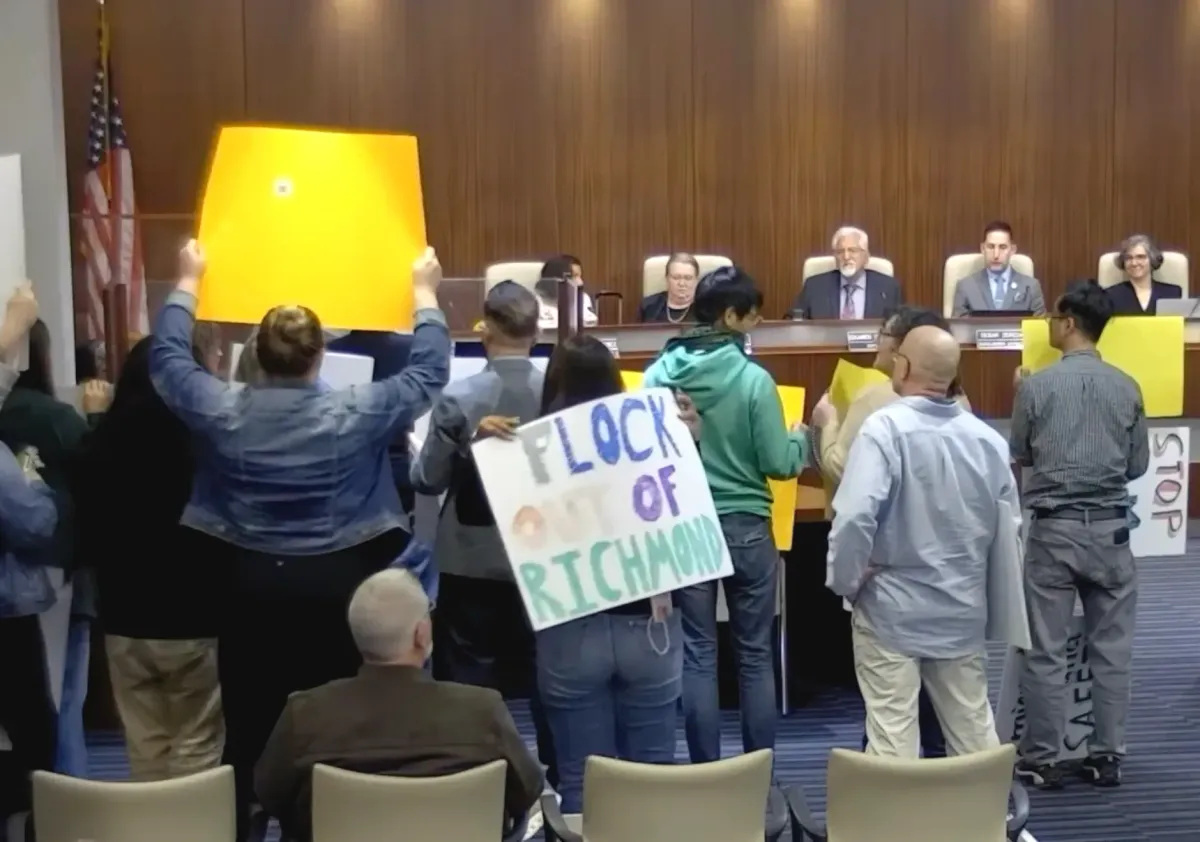
Simmons opened the item with a personal statement distancing the department from immigration enforcement. “The Richmond Police Department does not give ICE or other immigration authorities access to our local enforcement data, records, or information for immigration enforcement at all,” Simmons told the council. “This is both a professional matter for me and a personal matter for me. I have family that lives in Jalisco, Guadalajara, right now, and lives in this community right here.”
Simmons disclosed that the department currently has 51 open violent felony cases, including homicides, attempted murders, and human trafficking, where the disabled license plate cameras could have provided leads. He described a carjacking and shooting of a senior citizen on November 23, four days after the cameras were turned off, and a December shooting that left a juvenile victim likely permanently paralyzed. “These are the real victims and cases where we really are trying to bring closure for injustice, for people that are forever changed,” he said.
Robinson, whose vote proved decisive, said she found Flock’s conduct in failing to disclose its national data-sharing feature “deeply offensive” and “disingenuous.” However, she argued that the surveillance landscape had made a Richmond blackout ineffective. Pointing to a map showing Flock cameras deployed across Berkeley, El Cerrito, Hercules, San Francisco, and throughout Contra Costa County, she said a camera-free Richmond had become a gap rather than a refuge.
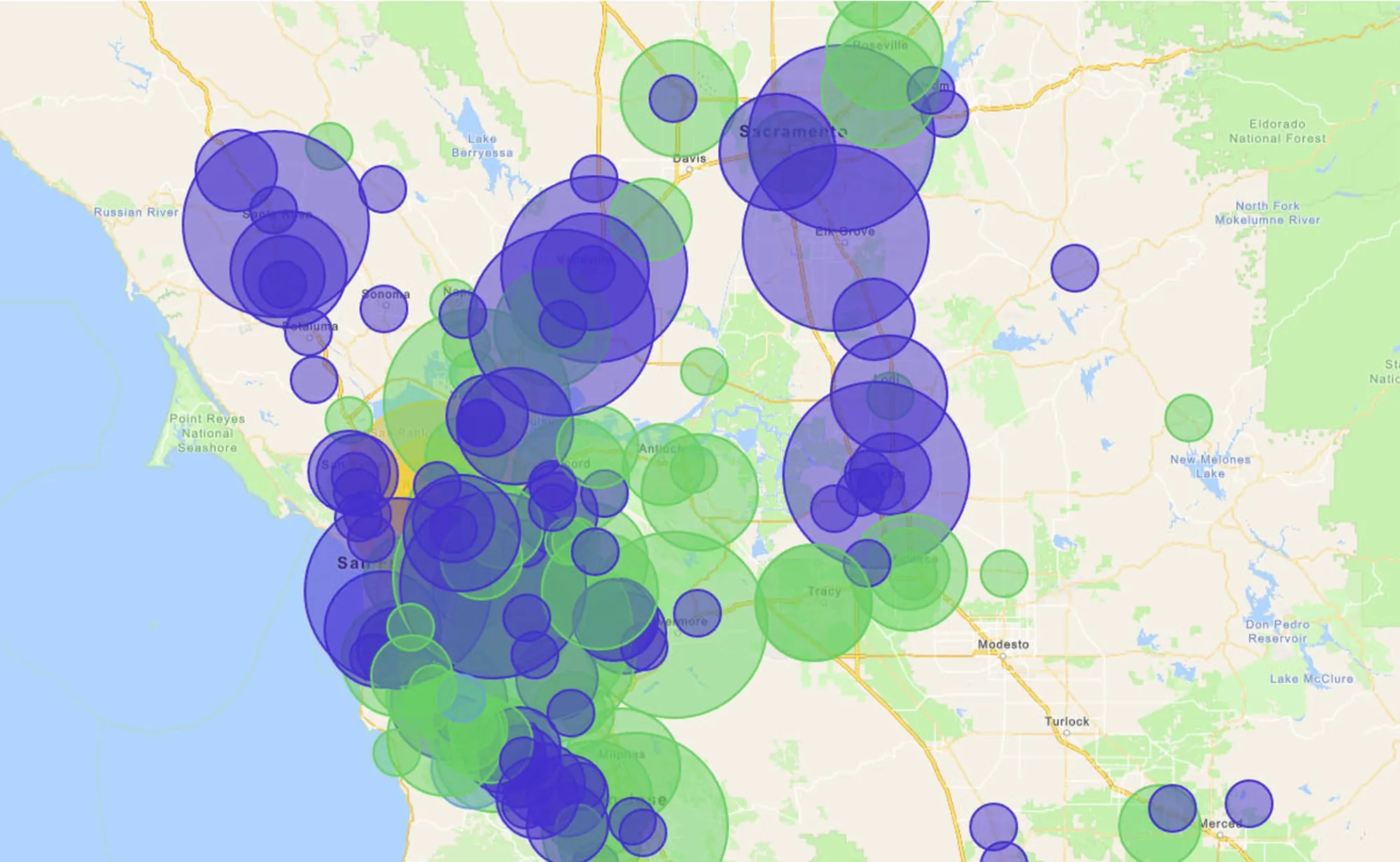
“It seems like no matter where you go in the Bay Area, as long as you don’t stay only in Richmond, you’re going to encounter a camera,” Robinson said. “I don’t think it’s realistic to believe that people who live in Richmond only stay in Richmond.”
Robinson said she also worried about the inverse effect of that gap. “If Richmond is a black hole, who is that going to look attractive to?” she said. “If I was somebody who needed to do what I do, and it’s not legal, I would go to Richmond.”
Councilmember Wilson, who voted no, challenged the statistical basis for reinstating the cameras. She pressed Simmons on a widely cited claim that vehicle thefts had spiked by 33 percent since the ALPR system was deactivated, noting that vehicle thefts had also risen by 50 percent year-over-year in November 2024, when the cameras were still on. “You can’t just cherry-pick the month,” she said.
Wilson also drew a pointed line between trusting the chief as a police leader and trusting him on data security. “I do trust you as a police officer and as a leader of police officers,” she told Simmons. “But I do not trust you as a data security expert. And I don’t trust Flock as a company that’s going to respect our boundaries here. Fool me once, shame on you. Fool me twice, shame on me.”
Wilson further argued that Flock’s broader business practices may violate Richmond’s sanctuary city policy regardless of what the company does with Richmond’s specific data.
“Even if we believe, which I don’t, that our data is siloed, the fact that data in other parts of the country are going to ICE through Flock means Flock brokers data for ICE,” she said. “It’s going to be a no for me tonight.”
Councilmember Claudia Jimenez, also voting no, called the contract renewal “another bad deal” and said the company had acted in bad faith by embedding a national data-sharing feature without disclosure.
“They put in the contract knowing that we were a sanctuary city where you can share data, that is acting in bad faith,” Jimenez said. “We cannot be trusting a company that tricked you.”
Jimenez also raised concerns about the chilling effect of the cameras on immigrant residents. “Mothers are calling me to say,’ Is it safe to go to the school and pick up the kids?’” she said.
Councilmember Bana, who made the motion to approve the extension, said the debate should focus on contract safeguards rather than on the company’s character. “I don’t believe in good company or bad company, I believe in guardrailing and a good contract and safeguards,” Bana said.
The Flock ALPR system was deactivated in October 2025 after Simmons discovered that a “national lookup” feature had been running in the background, making Richmond’s license plate data accessible to law enforcement agencies across the country. This configuration violated both city policy and California law. Flock has since turned off the feature for all California agencies and implemented a system that blocks out-of-state agencies from accessing California data, changes Simmons said were part of his decision to recommend reinstatement.
Simmons told the council he had simultaneously issued a request for proposals on February 27, seeking alternative vendors, with responses due March 27. He estimated that fully replacing the Flock system with a new vendor would cost approximately $350,000 in startup costs and take roughly a year to complete.
The contract extension covers not only the ALPR system but also Flock’s CCTV cameras and Drone as a First Responder program, which the fire department had been exploring for use in wildfire reconnaissance and hazardous materials responses. The council is expected to revisit the contract before the end of the year.
Mayor Eduardo Martinez, who voted no, adjourned the meeting in memory of Latetia Bobo, a Richmond eighth-grade teacher and musician who was fatally shot on March 7 in Oakland.
YOU GET MORE WITH A PAID SUBSCRIPTION
Your subscription enables Grandview Independent to deliver more:
- More time devoted to in-depth reporting
- Longer, more comprehensive stories
- Greater coverage of what matters to our community
Quality journalism costs money. Subscriptions allow us to keep reporting the stories that matter, without paywalls getting in the way of critical community information.
CLICK HERE TO SUBSCRIBE - Starting at just $10/month
FOLLOW US FOR BREAKING NEWS:
• Twitter: @GrandviewIndy
• Instagram: @GrandviewIndependent
• Facebook: @Grandview Independent
Copyright © 2026 Grandview Independent, all rights reserved.
Members Discussion