
City Council Updates
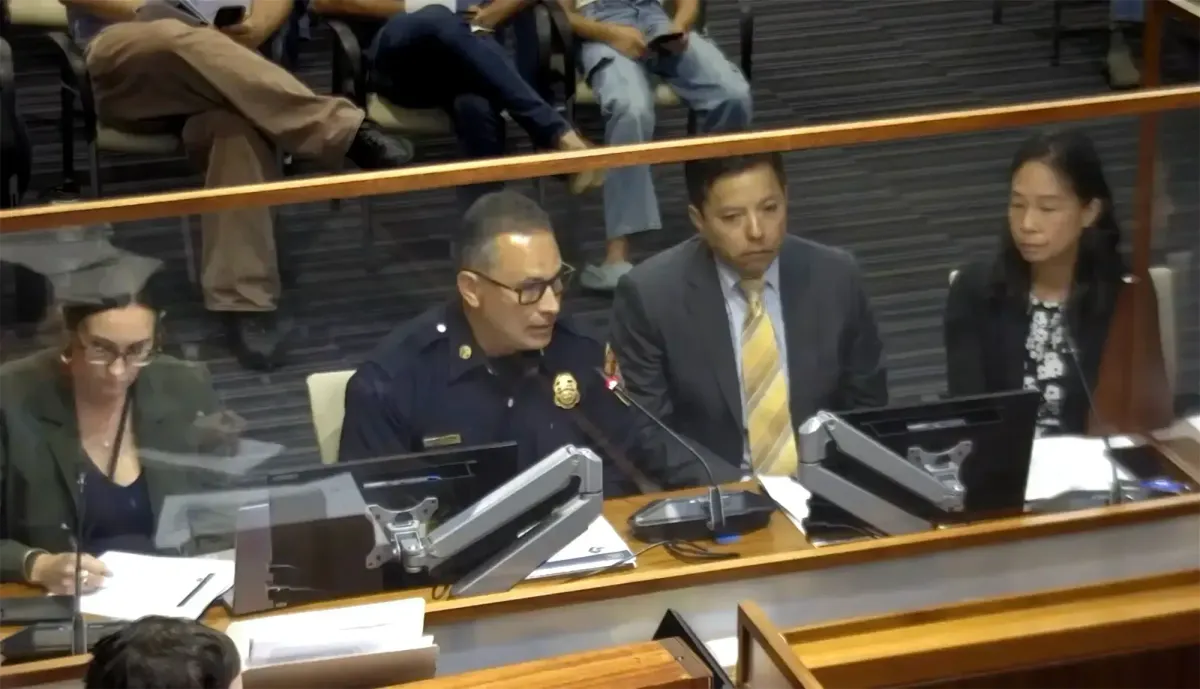
The Richmond City Council voted Tuesday to move forward with a $120 million fire station bond measure headed for the November ballot, then fell one vote short of doing the same for a measure that would have created an independent ethics commission.
Tuesday's vote was a first reading. A second reading and final adoption is scheduled for July 28. No debt is authorized until voters weigh in this fall, when the measure will need two-thirds voter approval to pass.
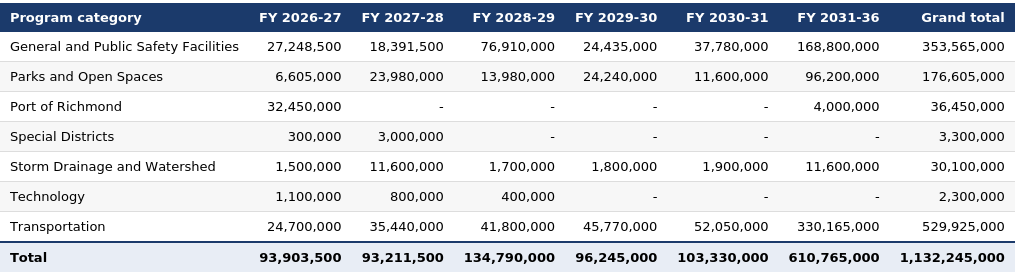
Director of Finance Emily Combs told the council the fire station needs are part of a much larger citywide problem. She said the city's 10-year capital improvement plan identifies more than $1.1 billion in unfunded or underfunded capital needs, of which more than $350 million relates to general and public safety facilities. The fire department's identified needs total about $115 million, meaning the bond addresses roughly 10 percent of the city's overall backlog.
Capital Improvement Projects $1,132,245,000 shortfall
Fire Chief Aaron Osorio told the council that three fire stations and the department's training facility are in the most urgent need of work. Station 63 on Valley View Road, built in 1991, has significant foundation settling, causing uneven floors, wall cracks and roof leaks that have led to black mold.
Station 66 on Clinton Avenue, the city's oldest firehouse, built in 1942, has only one interior bathroom and has relied on a portable trailer out back for 13 years. Station 67 on Cutting Boulevard, built in 1943, sits inside the Rosie the Riveter World War II Home Front National Historical Park, which Osorio said limits renovation options; it doesn't meet seismic standards, and its fire engines and ladder truck no longer fit the building. Osorio said the stakes go beyond comfort.
"We are relied upon in the worst days of people's lives and the disasters," he said, adding that under current conditions, "I can't make that promise right now" that crews could keep responding through a major earthquake or wildfire.
Combs and Wing-See Fox, the city's municipal advisor with Urban Futures, said the estimated average annual tax rate to repay the bonds would be about $22.15 per $100,000 of assessed property value. Combs said the estimate reflects more refined bond structuring, including spreading issuance across three sales two to three years apart.
Total debt service on the bonds, including principal and interest, is estimated at $249,749,206 if fully issued, with collection continuing through 2060. Bond Counsel Juan Galvan said debt service would be repaid solely through property tax and would not draw from the general fund.
Councilmember Jamelia Brown asked whether unspent Chevron settlement funds could be used to reduce the bond amount voters are asked to approve. Combs said that would be a policy decision for later, and Galvan noted the $120 million authorization does not obligate the city to issue the full amount.
Mayor Eduardo Martinez asked about Station 67's historic status, suggesting the city build new elsewhere and preserve the old station as a historic site. Osorio said a study identified building new near the current site as the likely best option, and noted the National Park Service would have first right of refusal to take over the building if the city stopped using it for fire operations.
If the council gives final approval July 28, the measure goes to the Contra Costa County Elections Division, followed by a period for impartial analysis and ballot arguments before the November 3 election.
Ethics commission measure falls short
Later in the same meeting, the council voted 3-4 against placing a second ballot measure before voters: the Richmond Government Accountability, Transparency and Ethics Act, known as the GATE Act, which would have created an independent ethics commission with subpoena power and a guaranteed budget floor.
The measure was introduced by Councilmembers Cesar Zepeda, Soheila Bana and Brown, who voted yes. Councilmembers Claudia Jimenez and Sue Wilson, Vice Mayor Doria Robinson and Martinez voted no.
It would have asked voters to establish a seven-member commission with a full-time investigator, authority to open investigations without a complaint, and jurisdiction over elected officials, appointed officials, lobbyists, contractors and nonprofits doing business with the city.
Zepeda, the measure's lead sponsor, said Richmond doesn’t have an independent mechanism to investigate complaints against elected officials or city management, since complaints currently go through the city attorney's office or human resources, both of which report up through the same council members they might need to investigate.
"There's no guarantee of investigation and transparency about the outcomes," he said. "That's an inherent conflict no one inside the system can fix."
Zepeda pointed to seven California cities with independent ethics commissions, including Los Angeles, Oakland and San Francisco, and said Richmond is an outlier among comparable cities because it doesn't have one.
Wilson challenged the accuracy of that comparison. The agenda report cites Los Angeles, Oakland, San Francisco and San Jose, all substantially larger than Richmond, as ethics-commission cities. Wilson said her research showed that none of Richmond's peer cities in Contra Costa County have an independent ethics commission, and that among similarly sized cities statewide, independent ethics commissions are largely limited to California's 10 largest cities.
"There is a problem with putting out an agenda report in which you've misinformed the public," Wilson told Zepeda, stopping short of calling it dishonest but saying his framing that an ethics commission is normal for a city Richmond's size "is not a normal thing to do."
Zepeda said the wording could have been sharper, but that comparisons to peer cities missed the point.
"Doesn't matter who hasn't done it," he said. "We are Richmond, wanting to hold ourselves accountable." He argued outside agencies have not intervened in past Richmond cases, including the Housing Authority.
Robinson said the city already has bodies that thoroughly investigate complaints against elected officials, and characterized the measure as politically motivated, arguing its sponsors were creating their own commission because "they don't like the results of the FBI, the FPPC, the Attorney General."
FPPC dismisses complaint against Richmond Councilmember Doria Robinson
The California Fair Political Practices Commission has dismissed a complaint filed by former Richmond Mayor Tom Butt against City Councilmember Doria Robinson, alleging violations related to her involvement with the Transformative Climate Communities grant. The FPPC determined there was insufficient evidence to support Butt’s claims that Robinson failed to
 Soren Hemmila
Robinson called it "a political witch hunt" driven by people who are "not winning at the polls."
Jimenez voted no as well, citing more pressing budget priorities, including deferred infrastructure needs such as fire station renovations. Brown, a co-sponsor, argued the council should let voters decide rather than block the measure from reaching the ballot.
Several members of the public spoke in support of the measure, citing a past case involving the Richmond Housing Authority in which residents said complaints about unrepaired units went unaddressed for years, as an example of the kind of case the commission could have investigated.
YOU GET MORE WITH A PAID SUBSCRIPTION
Your subscription enables Grandview Independent to deliver more:
- More time devoted to in-depth reporting
- Longer, more comprehensive stories
- Greater coverage of what matters to our community
Quality journalism costs money. Subscriptions allow us to keep reporting the stories that matter, without paywalls getting in the way of critical community information.
CLICK HERE TO SUBSCRIBE - Starting at just $10/month
FOLLOW US FOR BREAKING NEWS:
• Twitter: @GrandviewIndy
• Instagram: @GrandviewIndependent
• Facebook: @Grandview Independent
Copyright © 2026 Grandview Independent, all rights reserved.
Members Discussion